NFL Odds Formats UK: Fractional, Decimal and American Conversions
 Available in US
The moment a UK punter first encounters American odds notation. A number like -165 or +240 next to a team name there is usually a brief pause. Not confusion exactly, more the feeling of looking at a familiar concept through an unfamiliar lens. The underlying question being asked is always the same: what will I win, and how likely does the bookmaker think this is? The format is just the wrapper around that question. Once you can read all three wrappers — fractional, decimal, and American — you can compare odds across platforms and identify value in ways that punters locked into a single format cannot.
I spent the first year of my NFL betting career using only decimal odds because that is what my main sportsbook displayed. Switching platforms one day, I was confronted with American odds for the first time and genuinely did not know, on the spot, whether -110 was a good price for a spread favourite. It was not. And because I did not know that immediately, I nearly placed a bet at significantly worse value than I could have found two clicks away. That gap between understanding a market and efficiently navigating it is what this article is designed to close.
Table of Contents
- Fractional Odds Conversion: Understanding UK Betting Formats
- Decimal Odds: The European Standard
- American Moneyline Odds: What the Plus and Minus Signs Actually Mean
- Conversion Formulas: A Working Reference
- Implied Probability: What the Odds Are Actually Telling You
- Reading a Full NFL Betting Line: A Practical Walkthrough
- Closing Line Value: The Long-Term Health Check for NFL Bettors
- NFL Odds Formats: Questions Answered
Fractional Odds Conversion: Understanding UK Betting Formats
Fractional odds are the oldest format in UK betting and remain the default display on many traditional British sportsbooks, particularly for horse racing. For NFL betting, they appear alongside decimal odds as an alternative display option on most major platforms.
The format works like this: the fraction represents the ratio of profit to stake. Odds of 5/1 mean you profit £5 for every £1 wagered, plus your original stake returned. Odds of 3/2 mean you profit £3 for every £2 wagered. Odds of 1/3 (a heavy favourite) mean you profit £1 for every £3 staked. The calculation for any bet is: profit = (stake × numerator) / denominator.
A concrete NFL example. Suppose the Patriots are priced at 7/4 to win a game outright. A £20 moneyline bet returns: (20 × 7) / 4 = £35 profit, plus your £20 stake = £55 total. If the Patriots lose, you are down £20. The odds of 7/4 represent an implied probability of 4 / (4+7) = 36.4 percent. In other words, the bookmaker is pricing a Patriots win as occurring slightly over one time in three — with a margin added on top of that.
For NFL spread betting, the standard fractional price on a handicap market is 10/11. That might seem oddly specific, but it is deliberate: 10/11 converts to an implied probability of 11 / (11+10) = 52.4 percent. Both sides of the spread priced at 10/11 means the bookmaker is collecting a built-in margin of 4.8 percent, roughly £4.80 on every £100 of two-sided action. That is the standard “vig” (vigorish) or “juice” baked into NFL spread markets on most UK platforms.
The practical drawback of fractional odds for rapid calculation is that non-round fractions like 10/11, 5/6, or 11/10 are harder to compute mentally than clean decimals. For a punter making quick comparisons across multiple markets, decimal odds tend to be faster. Most platforms let you toggle between formats in your account settings.
One fractional odds convention specific to UK NFL betting: the moneyline on underdogs is often expressed as a fraction greater than 1/1 (i.e., “odds on” versus “odds against”). When you see an underdog at 9/4, that means the market considers them roughly a 30.8 percent chance to win. For UK punters already familiar with football outright betting, this register is intuitive. For those crossing from financial markets or US-style betting, it requires a brief recalibration.
Decimal Odds: The European Standard
Decimal odds have become the default format for online betting in the UK and across Europe, and for good reason: they are the fastest to interpret and the easiest to compare across markets. The decimal number represents the total return per unit staked, including your original bet. Odds of 2.00 means your total return is £2 for every £1 staked. That is a £1 profit plus your stake returned. Odds of 1.91 returns £1.91 for every £1 wagered. That is £0.91 profit plus your stake.
To calculate any decimal odds return: total return = stake × decimal odds. A £50 bet at 3.40 returns £170 total (£120 profit + £50 stake). Implied probability is 1 / decimal odds: 1 / 3.40 = 29.4 percent.
The NFL spread market typically sits at decimal odds of 1.90 or 1.91 on both sides. The difference matters: 1.90 implies a 52.6 percent bookmaker break-even rate; 1.91 implies 52.4 percent. Shopping for 1.91 versus 1.90 across platforms is a small edge, but over 100 bets at £50 each, the difference is roughly £50 in cumulative margin paid. That is real money.
Decimal odds also make the total return on Bet Builder combinations immediately transparent. If your first leg is 1.91, your second 1.85, and your third 1.75, the combined return before correlation adjustment is 1.91 × 1.85 × 1.75 = 6.18. After the platform applies its correlation discount, you might see 5.40 quoted. Seeing how far the platform has discounted from the theoretical uncorrelated combination is a useful signal about how aggressively they are pricing the correlation penalty.
American Moneyline Odds: What the Plus and Minus Signs Actually Mean
American odds notation divides the world into two cases: favourites, expressed as negative numbers, and underdogs, expressed as positive numbers. The dividing line is 100. Every price is expressed relative to a £100 stake.
Negative odds (favourites): -165 means you must stake £165 to win £100 profit. Total return on a winning bet: £265. The implied probability is 165 / (165+100) = 62.3 percent.
Positive odds (underdogs): +240 means a £100 stake wins you £240 profit. Total return: £340. Implied probability is 100 / (100+240) = 29.4 percent.
The NFL spread is almost always listed as -110 on both sides in American notation. That is the standard vig: stake £110 to win £100, implying 52.4 percent break-even. Occasionally you will see -105 or -107 on discount-margin platforms. That is a meaningfully better price and worth seeking out when available.
Converting American to fractional is straightforward. For positive odds: divide by 100 and express as a fraction. +240 = 240/100 = 12/5 fractional. For negative odds: divide 100 by the absolute value. -165 becomes 100/165 = 20/33 fractional (which most platforms round to 3/5 or 8/13 for display purposes). Converting to decimal: for positive odds, (American odds / 100) + 1 = decimal. +240 becomes 3.40. For negative odds, (100 / |American odds|) + 1. -165 becomes (100/165) + 1 = 1.61.
The reason American odds still appear on UK platforms at all is largely because NFL data feeds, including injury reports, line movements, and opening lines, are reported in American format by the US-based source. Some UK sportsbooks pass this through directly on their NFL markets rather than converting. If you are comparing lines across platforms, knowing the American format lets you read US betting sites for line-shopping purposes, which is where a lot of the market intelligence on NFL moves originates.
Conversion Formulas: A Working Reference
Rather than memorising abstract rules, I find a concrete reference set useful. Here are the conversions that come up most often in NFL betting practice.
Fractional to decimal: add 1 to the fractional result. 5/1 → (5/1) + 1 = 6.00. 10/11 → (10/11) + 1 = 1.91. 3/2 → (3/2) + 1 = 2.50.
Decimal to fractional: subtract 1 from the decimal, then express as a fraction. 2.50 → 2.50 – 1 = 1.50 = 3/2. 1.91 → 0.91 = 91/100 = 10/11 (simplified). 3.40 → 2.40 = 12/5.
American (positive) to decimal: (odds/100) + 1. +240 → 2.40 + 1 = 3.40.
American (negative) to decimal: (100/|odds|) + 1. -165 → (100/165) + 1 = 1.606, displayed as 1.61.
Decimal to implied probability: 1 / decimal. 1.91 → 52.4 percent. 2.50 → 40 percent. 3.40 → 29.4 percent.
Implied probability to decimal: 1 / probability. If you assess a team as a 58 percent winner, the fair decimal is 1 / 0.58 = 1.72. Any price above 1.72 represents value relative to your assessment.
The last conversion is the most important one: probability to fair price for systematic betting. The entire framework of identifying value in NFL markets depends on estimating outcome probability more accurately than the market has, then identifying instances where the posted price exceeds your fair-value calculation. That framework works regardless of which odds format the platform displays.
Implied Probability: What the Odds Are Actually Telling You
Every set of odds implies a probability. The relationship is direct and mechanical: the odds are the bookmaker’s stated (and margin-inflated) probability of an outcome occurring. Understanding this relationship transforms how you read an NFL line.
When a bookmaker opens the Patriots at -3 on the spread at 10/11 on both sides, they are saying: with this handicap applied, each team has approximately a 52.4 percent chance of covering. The extra 4.8 percent above 50/50 is their margin on each side. If you can identify situations where your assessment is that one side has a 56 or 57 percent chance of covering — meaningfully above the bookmaker’s implied 52.4 percent — you have a positive expected value position.
Professional handicappers who consistently beat NFL spreads operate in exactly this framework. The documented win rate for disciplined NFL spread bettors is 53 to 56 percent. This sounds barely above the bookmaker’s break-even threshold of 52.4 percent, but it compounds significantly over a full season of bets. On 100 bets at 10/11, the difference between 53 percent accuracy (net -1.4 units) and 56 percent accuracy (net +11.6 units at 10/11) is substantial. The margin is thin; the precision required is high.
The UK online sports betting market generated £7.8 billion in gross gambling yield in 2024 to 2025, a growth of 13.1 percent year on year. That scale means the market is efficient and well-staffed with professional-grade modelling. Beating it requires specific edges: superior injury information, better travel-logistics analysis for international games, sharper player props research, or identifying systematic public biases the market exploits. None of that is easy. But implied probability is the language you need to speak to even articulate where your edge might lie.
Reading a Full NFL Betting Line: A Practical Walkthrough
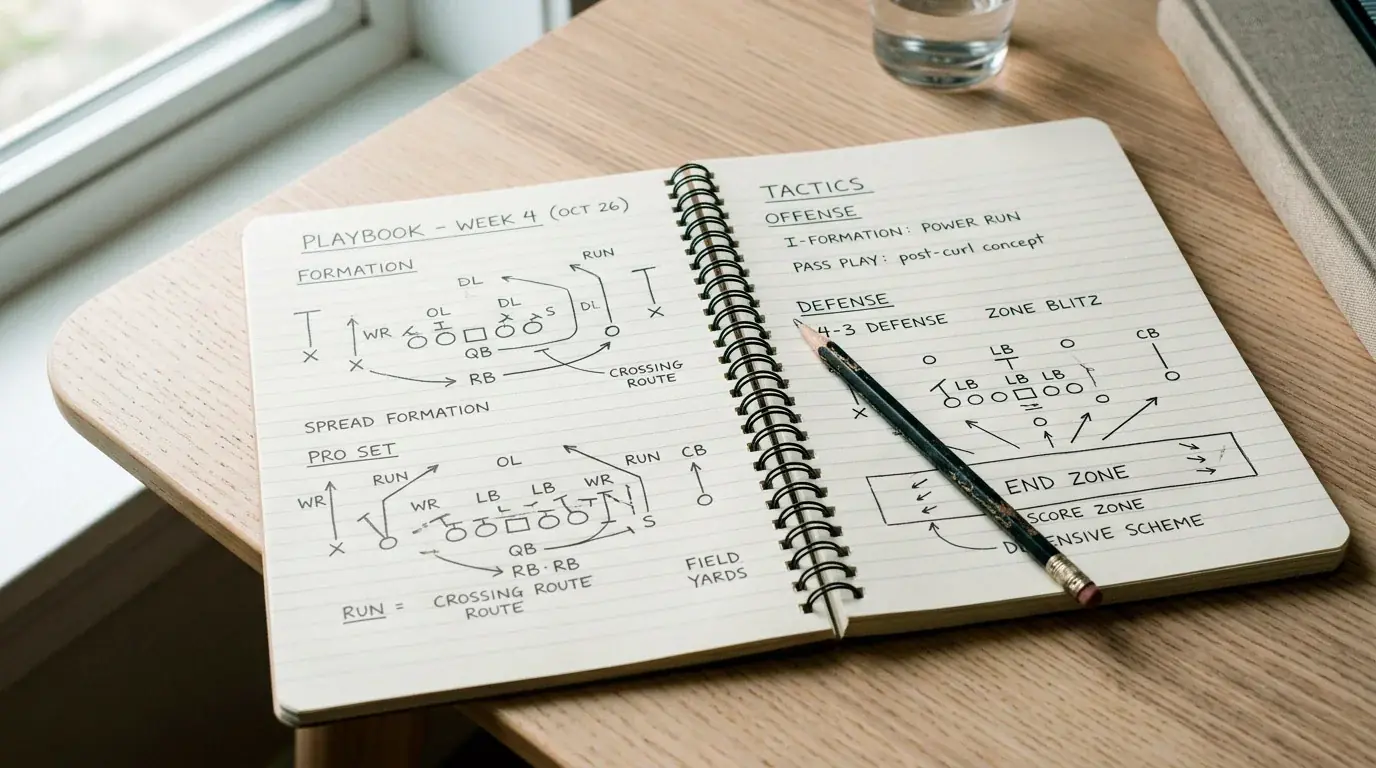
A standard NFL betting line on a UK sportsbook contains three separate markets displayed together. Here is how to read them.
A sample display might show: Kansas City Chiefs -6.5 (10/11) — 44.5 Over/Under (10/11). Chiefs moneyline: 2/7. Raiders moneyline: 9/4. Let us unpack each element.
The -6.5 next to the Chiefs is the point spread: Kansas City is favoured to win by 6.5 points. Backing the Chiefs at -6.5 means they must win by 7 or more. The (10/11) after it is the price on that side of the spread. The Raiders implied +6.5 means backing them requires only that they lose by 6 or less, or win outright. Historical data shows approximately 15 percent of NFL games end with a 3-point margin and 9 percent with a 7-point margin — meaning a spread sitting at 6.5 sits just below one of the most common final-score differences in the sport. That proximity to the key number at 7 is relevant to how many games “push” near this line.
The 44.5 Over/Under is the total points line. Both teams combined must score 45 or more for the over to win, 44 or fewer for the under. The (10/11) price applies to both sides of the total unless the display shows different prices, which occasionally happens when public money has moved one direction heavily.
The moneyline at 2/7 for the Chiefs and 9/4 for the Raiders reflects the win-only market. Chiefs at 2/7 fractional (1.29 decimal) implies a 77.8 percent win probability. Raiders at 9/4 (3.25 decimal) implies 30.8 percent. The combined implied probability is 108.6 percent. The extra 8.6 percent is the bookmaker’s combined margin on the moneyline market. Always check the overround before placing; if the combined implied probability on two-outcome markets exceeds 110 percent, the margin is higher than typical.
Closing Line Value: The Long-Term Health Check for NFL Bettors
Closing line value, or CLV, is the metric that separates punters who are genuinely beating NFL markets from those who happen to be winning. It is not about this week’s results. It is about whether the prices you are taking consistently beat where the market eventually settles.
The concept works like this. A game opens with the Chiefs at -3. You back the Chiefs at -3. By kick-off, sharp action has moved the line to Chiefs -5. The market has determined that your -3 position was better-priced than the closing line — you had positive CLV on that bet. Even if the Raiders win the game outright and your bet loses, having positive CLV means you made the right decision at the right price. In the long run, punters who consistently beat the closing line profit. Those who consistently take worse-than-closing prices lose, even if they get lucky short-term.
Tracking CLV requires recording the opening line at which you bet and the closing line at kick-off, then comparing. It is a discipline that most casual punters do not bother with, which is precisely why it is valuable as a diagnostic tool. If your CLV is consistently negative — you are taking lines that the market later adjusts against you — the problem is not variance. It is the quality of your information relative to the market’s. A more structured approach to finding NFL value is covered in the NFL value bets guide.
Professional NFL bettors who post a sustained 53 to 56 percent win rate on the spread almost uniformly show positive CLV. Their win rate is partly a reflection of their ability to identify value before the market moves to price it out. The UK market, with approximately 6.6 million people placing online sports bets in 2024, is liquid enough that sharp money reaches the lines quickly. Getting in early, on well-researched positions, before the professional money moves the line, is the operational version of CLV-focused strategy.
NFL Odds Formats: Questions Answered
How do I convert American odds to fractional odds used in the UK?
For positive American odds (underdogs): divide the number by 100 and express as a fraction. +240 becomes 240/100, simplifying to 12/5. For negative American odds (favourites): divide 100 by the absolute value. -165 becomes 100/165, which simplifies to approximately 20/33 or is displayed as 3/5 on most platforms. The quickest check: convert both to decimal first (positive: divide by 100 then add 1; negative: divide 100 by the absolute value then add 1), then convert decimal to fractional.
What does implied probability mean in NFL betting?
Implied probability is what the odds say about the likelihood of an outcome. It is calculated by converting odds to a percentage: for decimal odds, 1 divided by the decimal gives the implied probability. Odds of 1.91 imply 52.4 percent. Odds of 2.50 imply 40 percent. When the bookmaker prices both sides of a spread at 1.91, the two implied probabilities sum to 104.8 percent — the extra 4.8 percent above 100 is the built-in margin. Identifying when your own probability estimate exceeds the implied probability is the core of value betting.
What is closing line value (CLV) and why does it matter for UK punters?
Closing line value measures whether the odds you took were better or worse than the final odds at kick-off. If you backed a team at -3 and the line moved to -5 by game time, you had positive CLV — the market moved in your favour. Sustained positive CLV is the most reliable indicator that a bettor has a genuine edge, regardless of short-term results. Professional handicappers with long-term win rates of 53 to 56 percent on NFL spreads almost universally show positive CLV on their records.
How do I read an NFL point spread as a UK punter?
The spread is listed next to the team name as a positive or negative number. A negative number means that team is the favourite and must win by more than the listed margin. A positive number is the underdog who must either win outright or lose by less than the listed margin. Both sides are typically priced at 10/11 fractional (1.91 decimal), meaning the bookmaker has priced them as near-even once the handicap is applied. The spread number itself (e.g., -6.5) represents the bookmaker’s estimate of the margin of victory.
Prepared by the Bets for nfl editorial staff.