NFL Betting UK: Everything You Need to Know Before Placing Your First (or Next) Bet
Evidence-based strategy for UK punters: from first bet to closing line value
 Available in US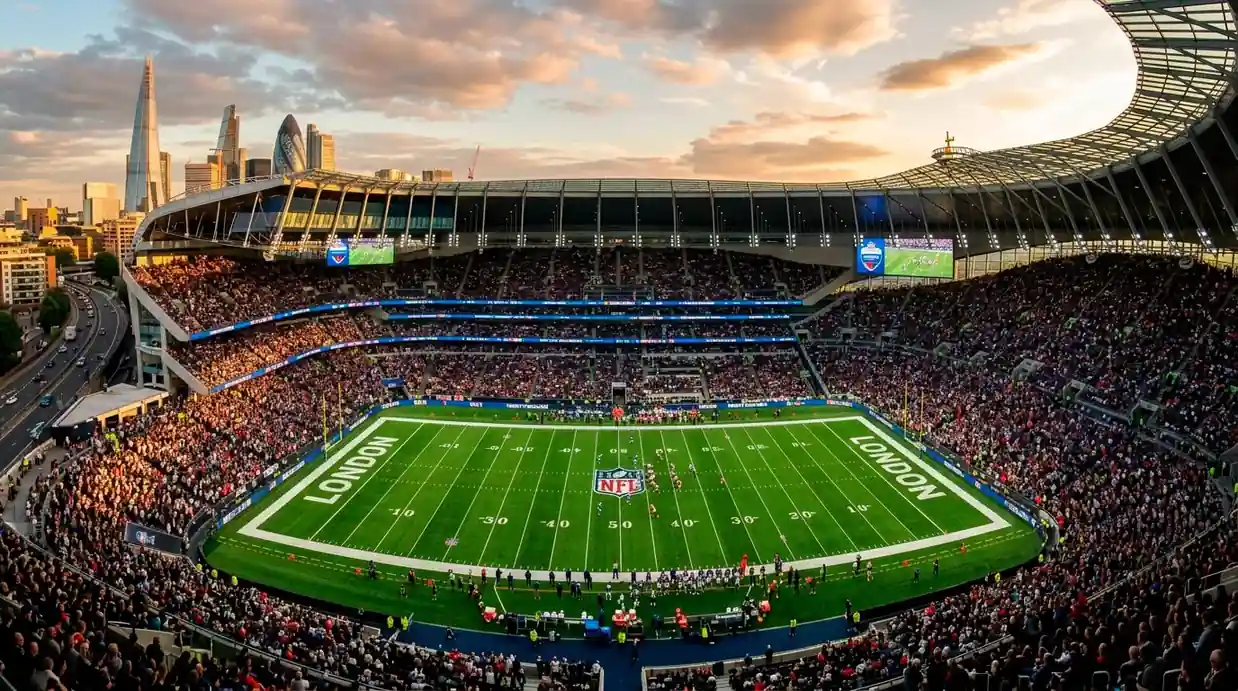
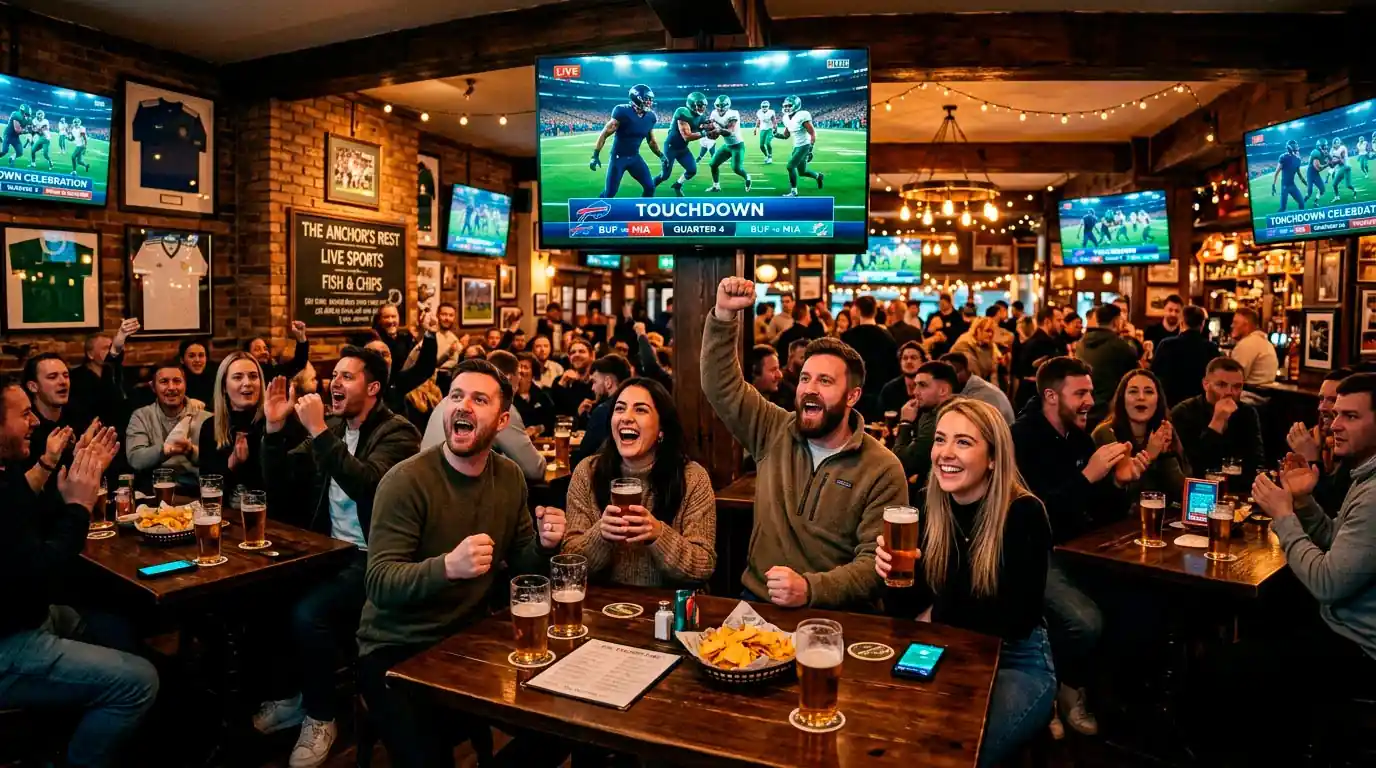
NFL betting in the UK has changed enormously. There are now roughly 6 million NFL fans in Britain, per industry tracking data, and the sport’s UK footprint keeps widening: Channel 5 aired its first dedicated NFL programming in 2025, three games came to London that same year, and Super Bowl LIX drew 127.7 million viewers globally — an all-time record. The audience is younger, more engaged, and, frankly, more willing to have a punt than any previous generation of UK gridiron fans.
But more people betting does not mean more people betting well. This guide exists to close that gap. Whether you have never placed a spread bet in your life or you have been hammering the handicap markets for years and want to sharpen your edge, what follows covers the whole picture: legal landscape, odds formats, market types, London Game angles, live betting strategy, and the parts of responsible gambling that most sites skip entirely.
Table of Contents
- What This Guide Covers and Why the Numbers Matter
- Why NFL Betting Has Exploded in the UK
- Betting on NFL in the UK: The Legal and Regulatory Landscape
- Reading the Numbers: UK Odds Formats vs American Lines
- NFL Betting Markets: From Moneyline to Player Props
- London Games: The Unique Betting Edge UK Punters Actually Have
- NFL Betting Toolkit
- Super Bowl Betting from the UK
- In-Play NFL Betting at Night: Making the Time Zone Work for You
- Building a Betting Strategy That Survives a Full NFL Season
- Gambling Harm, the Levy, and What Responsible Betting Actually Looks Like
- Common Questions from UK NFL Bettors
What This Guide Covers and Why the Numbers Matter
- Around 6 million UK fans follow the NFL; 68% are aged 18–44 — the same demographic driving online betting growth of 13.1% year-on-year per UK Gambling Commission data.
- NFL betting is fully legal and regulated by the UKGC; from April 2025 operators must pay a statutory Gambling Levy of 0.1–1.1% of GGY, channelling roughly £120 million per year into treatment and research.
- UK bookmakers display fractional and decimal odds; US-format moneylines are also offered. Converting between them is straightforward once you know the formula , covered in detail below.
- London Games create a genuine and underused betting edge: travel fatigue, crowd noise, and surface differences affect results in quantifiable ways that the opening lines often do not fully price.
- Professional handicappers win at a 53–56% clip at best. Anyone promising more is selling something. Bankroll management and closing line value are the two concepts most UK bettors ignore and most need.
Why NFL Betting Has Exploded in the UK
Ask anyone who covered UK sports betting a decade ago whether American football would become a genuine mainstream product and you would have got a polite laugh. Then something shifted , quietly at first, then all at once.
The numbers tell the story. About 6 million people in Britain now follow the NFL, and the country accounts for roughly 3% of all global NFL search traffic. That sounds modest until you realise the UK is competing with a country of 330 million who grew up with the sport. The audience is also young: 68% of UK NFL fans are between 18 and 44, per NFL International Fan Tracker data, and that demographic overlaps almost perfectly with the core online betting population.
Television has been the accelerant. Sky Sports has carried the NFL for years, but the shift to Channel 5 in 2025 , bringing two games every Sunday evening in primetime, changed the reach entirely. Luke Shiach, executive producer at Hungry Bear Media (the company behind NFL: Big Game Night for Channel 5), acknowledged the cultural challenge: “It’s such a process to try and introduce a new culture to an existing culture and we’ve got so many big sports in the UK.” But he also pointed to an unexpected catalyst: “Taylor Swift definitely has helped plant the seed of NFL, anecdotally.” Whether or not you credit Swift, the demographic data is hard to argue with: Super Bowl LVIII drew 1.73 million peak UK viewers in 2024, and the under-35 audience grew 91% year-on-year in a single cycle.
The betting market has followed the audience. Online sports betting now accounts for 38% of all UK online gamblers , around 6.6 million people, and the sports betting segment is valued at approximately £5.61 billion. NFL is not the biggest slice of that pie, but it is one of the fastest-growing, driven by a combination of live TV access, social media noise, and the London International Series bringing three home fixtures to the capital in 2025 alone.
Three of the top-five most popular NFL teams among UK fans changed in a single year between 2024 and 2025, according to YouGov tracking data , a volatility that reflects how much celebrity, media coverage, and in particular social media moment shape British interest in the sport.
What this growth means practically for bettors is more markets, better odds competition between bookmakers, and more data. When I started betting on NFL in the UK, you were lucky to get a handful of lines on a given game. Now a single regular-season fixture can carry 200-plus betting markets, with playoff games offering 300 or more. That abundance is an opportunity , but only if you know which markets are worth your attention and which are padding.
Betting on NFL in the UK: The Legal and Regulatory Landscape
Let me be direct on this because I have seen a lot of guides dance around it: NFL betting in the UK is completely legal, fully regulated, and available to anyone over 18 on any licensed platform. There is nothing ambiguous or grey-market about it. What has changed significantly in the last year is the regulatory environment that governs the operators you bet with , and those changes matter.
The UKGC Framework
Every bookmaker serving UK customers must hold a licence from the UK Gambling Commission (UKGC). That licence imposes obligations: identity verification, self-exclusion tools, deposit limits, and affordability checks. The UKGC publishes its own industry statistics, and the scale of the regulated market is striking . Gross gambling yield across the entire UK industry reached £16.8 billion in the financial year to March 2025, a 7.3% increase year-on-year. Online betting and gaming accounted for £7.8 billion of that, growing at 13.1%.
For bettors, the practical implications of UKGC licensing are significant. Licensed operators are required to segregate customer funds, participate in the Gambling Commission’s self-exclusion scheme (GAMSTOP), and comply with advertising standards. If a site is not UKGC-licensed, it cannot legally serve UK customers , so using one exposes you to zero consumer protection.
The Gambling Levy 2025 and What It Means
The biggest regulatory change in recent memory came into force on 6 April 2025. The Gambling Levy Regulations moved UK gambling from a voluntary funding model for research and treatment to a mandatory statutory levy. Operators now pay between 0.1% and 1.1% of their gross gaming yield into a central fund. In the first year, that is projected to generate around £120 million , roughly twice the peak of what the voluntary system ever produced.
The public health case for the levy was backed loudly by the NHS. Claire Murdoch, NHS England’s national director for mental health, called it essential to “treat this growing problem” , referring to gambling-related harm that cost the NHS an estimated £1.2 billion annually. Siân Griffiths CBE, chair of GambleAware’s board of trustees, described it as “a significant step towards protecting people from gambling harm.”
What does this mean for you as a bettor? Indirectly, it means the treatment infrastructure for gambling harm in the UK will grow substantially. Directly, it means operators face higher costs, and those costs are reflected in the margin they build into odds. From April 2026, the Remote Gaming Duty also rose from 21% to 40%, adding another layer of cost pressure on digital operators. Sharper punters should be aware that this environment creates slight odds compression over time: books have less room to be generous on fringe markets.
UKGC licensing is the only consumer protection a UK bettor has. Before placing any NFL bet, verify the operator holds a current UKGC licence: that single check eliminates the most serious risks.
Reading the Numbers: UK Odds Formats vs American Lines
The single biggest barrier I see UK bettors hit when they move from football or cricket to NFL is the odds. Not the complexity of the sport itself . Most people can follow the basic structure quickly enough, but the bewildering moment when a line reads “-110” or “+350” and the British brain tries to translate that into something meaningful. It does not help that most UK platforms display odds in two or three formats simultaneously.
Fractional Odds: The British Default
Fractional odds (5/1, 7/2, 11/10) express profit relative to your stake. If you back a team at 5/1 and stake £10, you receive £50 profit plus your £10 back — a total return of £60. Fractional odds below evens (shorter than 1/1) are written as fractions less than one: 1/2 means you win £5 on a £10 stake. The implied probability of a fractional odd is calculated as: denominator divided by (numerator plus denominator). So 5/1 implies a 16.7% chance of winning.
Decimal Odds: Simpler for NFL
Decimal odds (the European format, and the default on most UK platforms when you switch your settings) include your stake in the return. A decimal of 6.00 is equivalent to 5/1 fractional , stake £10, total return £60. The implied probability is simply 1 divided by the decimal: 1/6.00 = 16.7%. For NFL betting specifically, I recommend using decimal odds. The maths is cleaner, comparing lines across bookmakers is faster, and calculating expected value is straightforward.
American Moneyline: The NFL-Native Format
American odds (also called moneyline odds) are presented as positive or negative numbers. A negative number (-110) tells you how much you must stake to win £100 profit. A positive number (+350) tells you how much profit you win from a £100 stake. The formulas for conversion look like this:
Converting American odds to decimal
Negative American (e.g., -110): divide 100 by the absolute value, add 1. So: 100/110 + 1 = 1.909. Stake £10, return £19.09.
Positive American (e.g., +350): divide by 100, add 1. So: 350/100 + 1 = 4.50. Stake £10, return £45.00.
Implied probability from negative: absolute value divided by (absolute value + 100). -110 implies 110/210 = 52.4%.
Implied probability from positive: 100 divided by (positive value + 100). +350 implies 100/450 = 22.2%.
Why the Format Gap Matters for NFL Bettors
US-facing sportsbooks and the broader NFL analytical community publish lines and historical data in American format. Line movement discussions on Reddit, podcasts, and analytics sites all reference moneylines by default. If you cannot read a -6.5 spread at -110 juice fluently, you are going to miss context that sharper bettors are using to find value. The -110 figure, by the way, is the standard “juice” or “vig” that bookmakers build into most spread and totals lines: it means both sides of a bet are priced at slightly less than evens, creating the house margin. Recognising when a line is at standard juice versus when it has been shaded gives you a read on where the book thinks the action is coming from.
For a deeper look at NFL handicap betting, including point spread strategy and how vig affects long-term profitability, see the dedicated guide linked here.

NFL Betting Markets: From Moneyline to Player Props
The first time I looked at a full NFL betting menu on a major UK platform, I counted 47 markets on a random regular-season game. By the time the current season rolled around, that number had tripled. More markets is not automatically better . Most of that expansion is prop bets and micro-markets with wide margins built in. Knowing which markets offer genuine betting value and which exist purely to capture recreational money is half the game.
Moneyline
The simplest market: pick which team wins. No spread, no handicap: just the outright result. On a UK platform, this is often labelled “Match Winner” or “Match Odds.” Moneyline betting suits games with a large favourite because the handicap market may not accurately price a blowout scenario. It also simplifies parlays: each leg is binary.
Point Spread (Handicap)
The spread — called “handicap” on most UK platforms, is the defining market of NFL betting. The favourite gives away points; the underdog receives them. A spread of -6.5 means the favourite must win by 7 or more for a spread bet on them to win. About 15% of NFL games end with exactly a 3-point margin, and roughly 9% with exactly 7 points, per historical data from the 2025 season , which is precisely why lines of -3 and -7 carry special significance. Crossing these “key numbers” in line shopping can make a meaningful difference over a season.
Totals (Over/Under)
The totals market — also labelled “Over/Under” or simply “Total Points”, sets a combined score for both teams, and you bet whether the actual score will exceed or fall short of that number. Totals are particularly popular for NFL because scoring patterns are more predictable than game outcomes: pace of play, weather, and defensive matchups all create angles that sharp bettors have been exploiting for decades.
Prop Bets and Player Markets
Player props — bets on individual statistics like rushing yards, passing completions, or anytime touchdown scorer, have become the fastest-growing NFL market segment in the UK. They offer genuine opportunities because bookmakers cannot price every individual statistic as precisely as they price game outcomes. The margins on player props vary significantly, though; a flat “anytime touchdown scorer” market typically carries more margin than a standard spread bet, so context matters. For a detailed breakdown of how to find value in player props, the NFL prop bets guide covers the specific markets worth targeting each week.
Bet Builder / Same-Game Multi
Bet Builder (also called Same-Game Multi or SGM) lets you combine multiple selections from the same match into a single bet , for example a specific player to score, the total to go over, and the favourite to cover the spread. The combined odds look attractive, but the selections are not independent: they are drawn from the same game and often correlated. Books price this in, so the effective margin on a Bet Builder is typically higher than on standalone markets. Use them selectively, not as a default.
Futures and Outrights
Futures — Super Bowl winner, conference champions, division winners, MVP: priced early in the season when information is most uncertain, which is when they can offer the most value. The Super Bowl outright market in particular attracts heavy UK volume; people who barely watch the sport will make it. That recreational money creates opportunities for bettors who track injuries, coaching changes, and schedule strength.
Moneyline
Pick the winner outright. Best for heavy underdogs where spread adds complexity.
Handicap / Spread
The core market. Favourite gives points, underdog receives them. Key numbers 3 and 7 matter.
Totals
Over or under a combined points total. Weather, pace, and defensive matchups are key inputs.
Player Props
Individual statistics. Can offer value when books underprice specific matchups.
Futures / Outrights
Season-long bets. Best value early; margins widen as certainty increases closer to the event.
London Games: The Unique Betting Edge UK Punters Actually Have
Here is something almost no guide will tell you plainly: the NFL International Series games in London are the one category of NFL betting where UK-based punters genuinely have a structural information edge over the US market. Not because of local knowledge in the traditional sense, but because of factors the opening lines routinely underweight — and that you can analyse in ways that most US-focused handicappers simply do not bother with.
The Travel Fatigue Angle
When an NFL team travels to London, they are crossing five to six time zones and playing a game that kicks off in the early afternoon local time — which is, for their bodies, somewhere between 9am and 10am on the East Coast, or 6am to 7am on the West Coast. The travel schedule matters enormously. A team that travels on a Thursday or Friday has time to adjust. A team that crosses the Atlantic on a Saturday and plays on a Sunday morning is playing on disrupted sleep with a compressed preparation window.
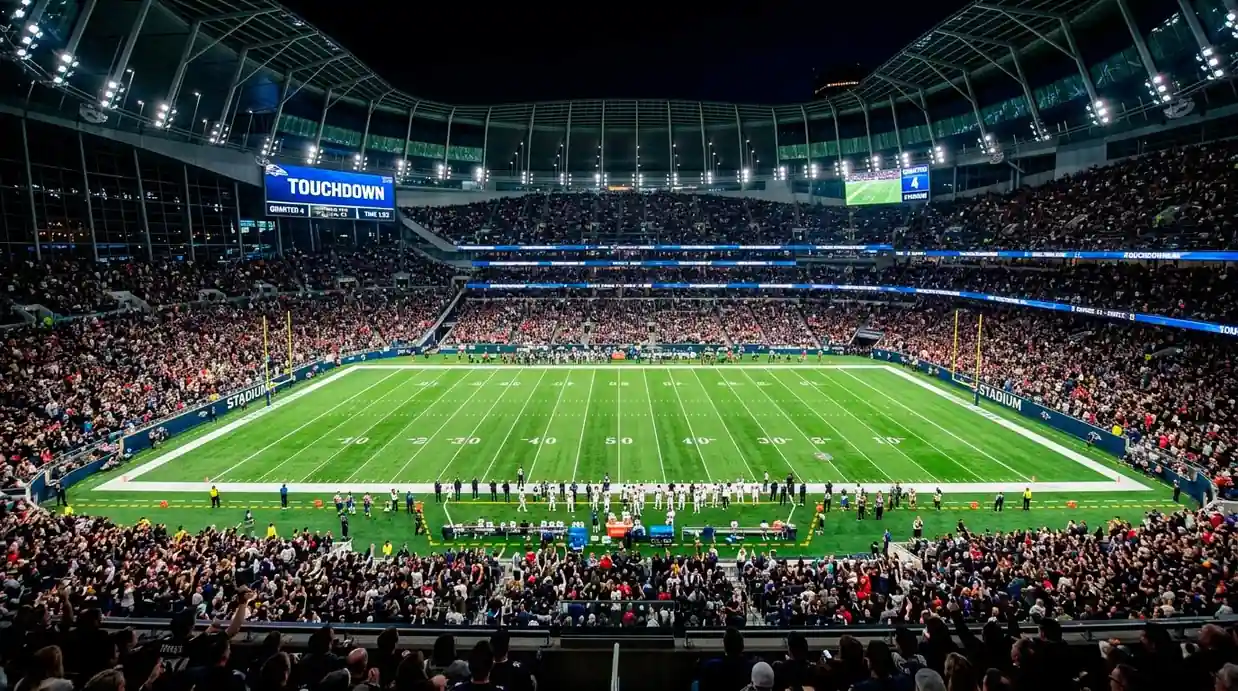
The Tottenham Hotspur Stadium — purpose-built for NFL with a retractable grass pitch, opened in 2019 and seating 62,850 — hosts games on a grass surface rather than the artificial turf many US teams practice on year-round. Surface differences affect injury rates and running game efficiency in measurable ways. These are not abstract concerns: they show up in box scores and they are factual inputs that handicappers can track.
The compare.bet editorial team put it directly in their 2026 guide: “London games are more than just spectacles — they create unique betting scenarios, as UK fans often see them live, and bookmakers offer special markets tied to location-specific variables.” Twenty-five of the 28 London NFL games played between 2007 and 2019 drew at least 83,000 spectators. That crowd noise, that atmosphere, creates a home-field-adjacent advantage for whichever team has more recent experience playing in the UK — another factor that rarely appears in US line-setting models.
NFL Toolkit
NFL Betting Toolkit
The UK punter’s actual edge: read the jet-lag in a London Game, strip the juice out of any line, and stake to survive the season.
London Games are the one spot UK punters hold an edge — opening lines underprice travel. Set each team’s home zone and travel day to see whose body clock is wrecked at kickoff.
Team A
Home time zone
Flew to London on
Team B
Home time zone
Flew to London on
A structured read on travel disruption, not a guaranteed outcome. Pair it with injury reports and surface notes (Tottenham’s grass differs from the turf many US teams practise on). London totals have historically trended under.
Standard juice is −110 on both sides (about 4.8% hold). Enter both prices to strip the margin out, see each side’s true probability, and spot when a line has been shaded.
No-vig fair odds remove the margin so you can compare a line to your own probability. A side carrying heavier juice than the other is a shaded line — a clue to where the book expects the money.
Even the best handicappers top out at 53–56% on spreads. Size to survive the losing runs that come with that, and keep your expectations honest.
Pros bet only 20–30% of games — roughly 54 of 272 a season — where they have a real edge. You need ~52.4% at standard juice just to break even; betting everything on TV dilutes any edge you have.
Markets Worth Examining Around London Games
Totals markets in London games have historically trended lower than regular-season averages, reflecting the combination of travel disruption, unfamiliar surface, and compressed preparation. First-half spreads can also diverge interestingly from full-game lines when one team has a clear travel disadvantage early in the game. These are not guaranteed edges , but they are angles worth modelling rather than assuming. Track which team is designated “home,” where each team flew from, when they travelled, and whether any key position groups have injury concerns exacerbated by the longer journey.
For everything you need on approaching the International Series from a betting angle, including specific historic trends and market-by-market analysis, the dedicated piece on NFL London game bets goes into far more depth than I can do justice to here.
Super Bowl Betting from the UK
Super Bowl LIX (February 2025) attracted 127.7 million viewers globally, making it the most-watched television broadcast in history according to Nielsen Media Research. In the UK, the game peaked at 1.73 million viewers at 23:43 GMT, with the under-35 demographic up 91% year-on-year per NFL UK and Nielsen data. Betting volumes follow audience closely: the Super Bowl is the single heaviest NFL betting event of the year for UK punters, and bookmakers typically open their Super Bowl futures market immediately after the conference championships in January.
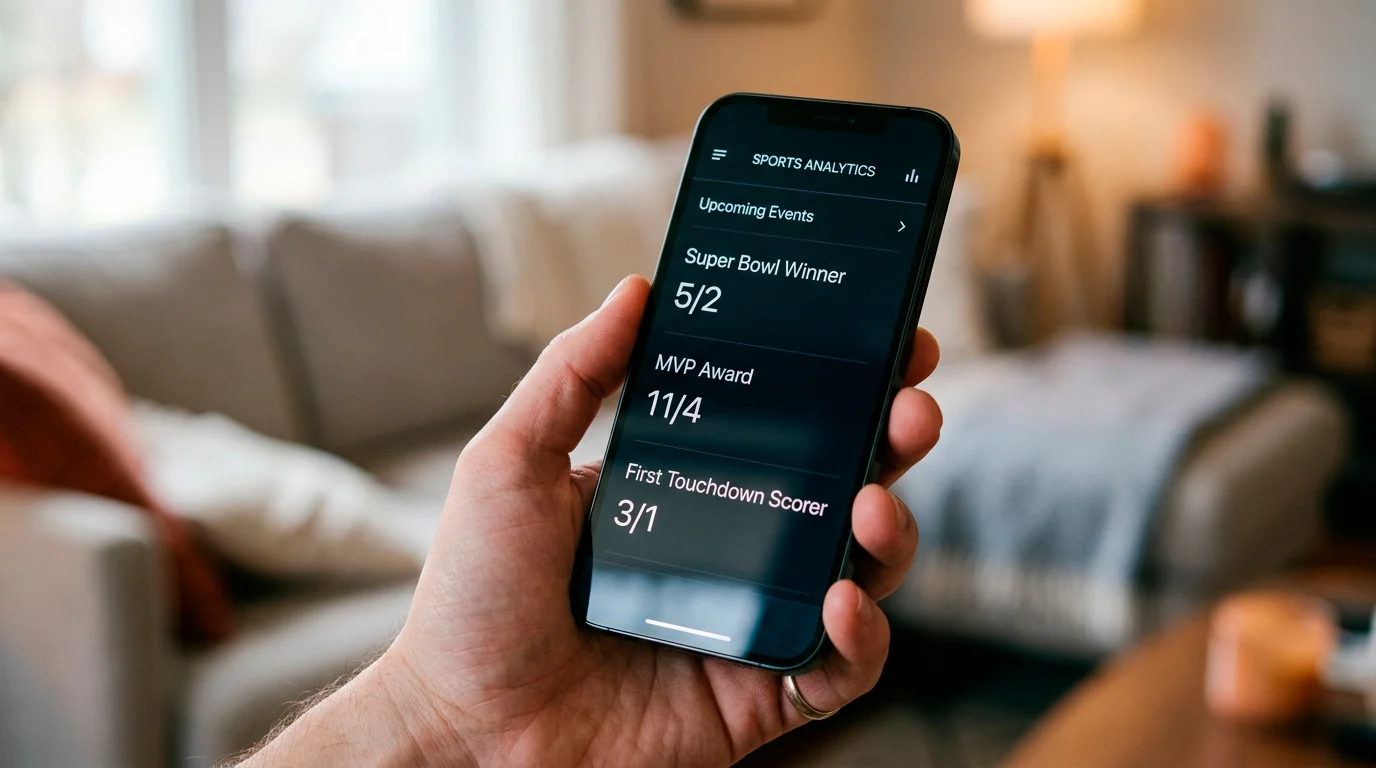
The winner market is the obvious entry point, but the margins on Super Bowl outright odds narrow as the game approaches . Early bettors often find the best prices. The MVP market operates on a different logic: quarterbacks from the winning team win the award the overwhelming majority of the time, so the question is less “which team wins” and more “which QB wins it.” This creates price inefficiencies when analysts disagree on the likely finalist.
Prop bets are where Super Bowl betting truly expands. UK bookmakers typically offer first-scorer, anytime touchdown scorer, total player yards, first-quarter margin, and a range of novelty markets tied to the halftime entertainment. The novelty markets attract large casual volumes and are priced accordingly conservatively. The player-performance props are more fertile for bettors who have done their homework on matchups and injury reports.
For UK punters, the practical reality is timing: Super Bowl Sunday in the US means roughly 23:30 GMT kick-off, putting the game into Monday morning by half-time. Stake sizing for a late live-betting session should reflect the cognitive demands of staying sharp to 03:00 GMT. Many experienced UK bettors place pre-game bets on Friday or Saturday when lines are still fresh, then limit live exposure to a single pre-planned market rather than improvising across the full range.
Futures offer an alternative for those who prefer to commit earlier. Super Bowl winner futures open pre-season at wide margins and tighten through the campaign. The optimal window varies by season but is often mid-way through the regular season , when teams have proven their quality and odds have not yet been compressed by the run-in. Division winner and conference winner markets offer similar opportunities at tighter spreads than the outright.
In-Play NFL Betting at Night: Making the Time Zone Work for You
Most UK guides mention in-play betting as a feature and move on. None of them talk about the specific challenge of betting live on a sport where kick-off is 6pm Eastern , which means 11pm in London, with the fourth quarter potentially stretching past 3am. I have done it. There is something almost meditative about it when you are prepared, and something genuinely expensive when you are not.
The Cognitive Load Problem
In-play betting at midnight requires a different discipline than betting at 2pm on a Saturday. Fatigue affects decision-making long before you notice it. The games most worth targeting for live betting from a UK perspective are the early Sunday window games that kick off at 6pm ET , giving you the full game before 2am London time, with your sharpest thinking available during the critical second half. Late Sunday Night Football (typically 8:20pm ET kick-off) runs until after 4am UK time and is best approached either not at all in-play, or with pre-game positions already established.
What In-Play NFL Markets Actually Offer
The most liquid in-play NFL market is the live spread, which updates after every play. Drive-level momentum creates genuine pricing inefficiencies . A team that has just gone three-and-out twice does not become twice as bad, but the live line may overreact as if it has. Conversely, a team that scores on a pick-six has not necessarily become unstoppable, but the live spread on its opponent may briefly overshoot.
Player prop in-play markets — live rushing yards, live passing yards, live anytime touchdown: these tend to have wider margins than pre-game equivalents, but they update quickly and can capture short-term usage trends that game-flow makes visible. If a starting running back is getting the ball on every first down in the fourth quarter of a close game, the live anytime TD market is lagging the on-field reality. That lag is opportunity.
Before Going In-Play on a Late NFL Game
- Set a hard stop time — if you are not comfortable staying sharp until the final whistle, set your last in-play bet window at half-time.
- Check both team injury reports before kick-off so late scratches do not catch you mid-game.
- Pre-calculate the implied probabilities at the spread and total you are targeting ; a reference number stops you anchoring to whatever the live line happens to be.
- Use cash out as a planning tool, not an impulse. Decide in advance at what profit or loss level you would cash out a position.
- Keep stake sizes consistent. The temptation to chase in-game at 1am with doubled stakes is real; the results are reliably bad.
Industry data shows that integrating live streaming into betting platforms improves user engagement by 25%, per operator research. Bookmakers know this . The live experience is designed to keep you watching and wagering. That design works on most punters. Being aware of it is the first step to not being most punters.
For a full strategy breakdown on in-play NFL betting, including specific market sequences and timing approaches, see the NFL in-play betting guide.

Building a Betting Strategy That Survives a Full NFL Season
There is an uncomfortable truth at the centre of sports betting that most guides skip over: the professional handicappers who are genuinely profitable long-term win at a rate of 53% to 56% on spread bets. That is the ceiling , not the average. Below that ceiling sits everyone who is being less selective, less disciplined, or less rigorous about line value. The difference between that 53% and a break-even 50% sounds small. Across hundreds of bets over a season, it is the difference between a profit and an empty bankroll.
Bankroll Management: The Foundation That Nobody Talks About With Numbers
Every guide tells you to “manage your bankroll.” Almost none tell you what that actually means in practice. A conservative approach used by serious handicappers is to set individual unit stakes at roughly 1% to 2.5% of your total bankroll, never exceeding 2.5% on any single bet regardless of confidence level. On a £500 bankroll, that means maximum stakes of £12.50 per bet. It sounds small. That is entirely the point: it means a losing run of 10 straight bets reduces your bankroll by 25% rather than eliminating it.
The other element that matters is defining what your unit represents before the season starts and not adjusting it upward during a winning run. The psychological pull to “ride the momentum” with bigger stakes mid-season ranks among the most consistent ways bettors destroy profits they have already accumulated.
Closing Line Value: The Metric That Separates Sharp Bettors
Closing line value (CLV) is the concept that the closing spread (the line at kick-off, after all the sharp money has moved it , representing the most accurate available probability estimate. If you consistently bet a team at -3 and the line closes at -5, you got the better of the market: you beat the closing line. Tracking your CLV over time tells you whether your judgement is adding value or whether you are just riding variance.
UK bettors almost never hear about CLV because the concept emerged from the US market and the British betting discussion is still mostly focused on “tips” and “form.” But it is the most honest performance metric available. If your bets consistently beat the closing line, you will be profitable over time. If they consistently lose to the closing line, you are not finding value — you are guessing late.
Which Games to Target
Professional handicappers do not bet every game. The data suggests the best-performing bettors target somewhere between 20% and 30% of available games , the ones where they have identified a specific edge. An NFL season offers 272 regular-season games plus playoffs. Betting 20% of them means roughly 54 games. If that sounds like not enough action, the alternative is betting more games with less edge, which is precisely the path to a depleted bankroll by Week 12.
Do
- Set unit size before the season and stick to it regardless of results.
- Track closing line value on every bet you place.
- Shop lines across multiple licensed platforms . Even a half-point difference on a key number compounds over a season.
- Keep records: date, market, line bet, closing line, result. No records means no learning.
- Research travel schedules and injury reports before London Game bets.
Do not
- Chase losses with inflated stakes mid-week.
- Bet markets with high margins (same-game multis, exotics) as your primary volume.
- Bet every game because it is on TV.
- Adjust bankroll upward on a winning streak without also adjusting downward on a losing one.
- Treat “tips” from social media accounts as a substitute for your own analysis.
Value betting in NFL is fundamentally about finding discrepancies between your probability estimate and the implied probability in the line. The Punters Page summarised this principle cleanly: “To find the best value bets in the sport, you need to be flexible about which markets you bet on.” That flexibility is not random: it means being willing to back a totals line when the spread looks tight, or a player prop when the game-level markets are efficiently priced. For deeper analysis on the strategic dimension of NFL betting strategy including CLV tracking methods and weekly preparation routines, the linked guide covers the full framework.
Gambling Harm, the Levy, and What Responsible Betting Actually Looks Like
I want to spend real time on this rather than treating it as a box-ticking exercise at the bottom of the page, because the data deserves honest engagement , not a paragraph that says “please bet responsibly” and moves on.
Around 340,000 adults in the UK are classified as problem gamblers, per UK Gambling Commission prevalence surveys. A further 1.8 million are categorised as “at risk.” Those are not small numbers. Between 2019 and 2024, NHS referrals for gambling disorder increased by 34%. The NHS estimates its annual cost from gambling-related harm at approximately £1.2 billion. These figures exist alongside a legal, regulated industry that generates significant tax revenue — the net fiscal position is genuinely complex — but the harm is real and quantifiable, not theoretical.
What the Gambling Levy Actually Funds
The mandatory Gambling Levy introduced in April 2025 was designed precisely to address this treatment gap. With around £120 million per year now flowing into research, prevention, and treatment (twice the previous voluntary peak), the UK is building a materially larger support infrastructure. The Gordon Moody Association, one of the UK’s specialist residential gambling treatment providers, stated that the levy “will fundamentally change how the UK funds and commissions gambling treatment services.” That is a significant structural shift — one that took years of NHS advocacy, bereaved family campaigning, and parliamentary pressure to achieve.
Recognising the Warning Signs
Sports betting, and NFL betting in particular, carries specific psychological risks that differ from casino gambling. The season structure — 18 weeks of regular season, playoffs, then a long off-season — creates patterns of escalation and withdrawal that are distinct from daily gambling. Bettors who find themselves increasing stakes to recover losses, betting on games they have no interest in beyond the money, or spending significantly more time on betting-related research than on any other activity are showing early warning signs worth taking seriously.
GAMSTOP is the UK’s national self-exclusion register. A single GAMSTOP registration excludes you from all UKGC-licensed online operators for a minimum of six months, up to five years. If you have any concern about your relationship with gambling, GAMSTOP is free to use and takes effect within 24 hours.
Gambling should not be your primary source of NFL engagement. If you find yourself watching games you would otherwise skip solely because you have money on them, that is worth noticing — it is a sign that the betting is driving the sport, not the other way around.
The youth data also merits a clear mention: 30% of young people aged 11 to 17 spent their own money on some form of gambling in 2025, up from 27% the year before, per UKGC and Ipsos research. The proportion showing markers of problem gambling doubled in a year, from 0.7% to 1.5%. These figures are a reminder that the industry’s growth has an audience dimension that extends well beyond the 18-plus demographic it is supposed to serve. If you share betting content, tips, or strategies in any format, being mindful of the audience that content reaches is not excessive caution — it is basic responsibility.
Common Questions from UK NFL Bettors
Is NFL betting legal in the UK?
Yes, completely. Any bookmaker holding a UK Gambling Commission licence can offer NFL betting markets to UK adults aged 18 and over. The UKGC ranks among the world’s most rigorous gambling regulators, and its licence is the key indicator that an operator meets consumer protection standards — including identity verification, responsible gambling tools, and fund segregation. Unlicensed offshore sites are not legally permitted to serve UK customers and offer no consumer protections.
What is the difference between a handicap bet and a point spread in NFL?
They are the same thing. UK bookmakers use the term “handicap,” while US sportsbooks use “point spread” or simply “the spread.” Both describe a margin assigned to the favourite (who gives up points) and the underdog (who receives them). If a team is listed at -6.5, they must win by 7 or more for a handicap bet on them to succeed. A team at +6.5 can lose by up to 6 points and still “cover.” The half-point (.5) on most lines eliminates the possibility of a push — a result that lands exactly on the spread number.
How do I convert American moneyline odds to fractional or decimal?
For negative American odds (e.g., -110): divide 100 by the absolute value and add 1 for the decimal equivalent. So -110 becomes (100/110) + 1 = 1.909 decimal, or approximately 10/11 fractional. For positive American odds (e.g., +250): divide by 100 and add 1. So +250 becomes (250/100) + 1 = 3.50 decimal, or 5/2 fractional. To find implied probability from negative odds: divide the absolute value by (absolute value plus 100). -110 implies 110/210 = 52.4%. From positive odds: divide 100 by (the number plus 100). +250 implies 100/350 = 28.6%.
Are London NFL games worth betting on specifically as a UK punter?
They can be, but the edge requires specific research rather than general enthusiasm. The key factors to investigate are: which team has the travel disadvantage (West Coast teams crossing more time zones face greater disruption), the travel schedule (a Saturday flight versus a Thursday flight creates very different preparation conditions), surface familiarity (Tottenham Hotspur Stadium uses natural grass, which differs from the artificial turf many US teams practice on), and historical line movement on London games specifically. The opening lines for London games are often set by models calibrated for regular US venues — they do not always fully price the unique variables of an international fixture.
What is closing line value and why does it matter?
Closing line value (CLV) measures whether the odds you got were better than the odds available at kick-off, after all the sharp money has moved the line to its most accurate point. If you backed a team at -3 and the line closed at -5, you beat the closing line — you got the better number. Consistently beating closing lines over many bets is the most reliable indicator that your assessment is adding genuine value rather than riding short-term variance. Tracking CLV is straightforward: record the line at the time of your bet and the closing line, then compare. Over time, positive average CLV correlates strongly with profitability; negative CLV suggests you are betting into rather than ahead of the market.
What does the Gambling Levy mean for me as a bettor?
The Gambling Levy (in force from April 2025) requires licensed operators to contribute 0.1% to 1.1% of their gross gaming yield to a statutory fund for research, prevention, and treatment of gambling harm. As a bettor, you do not pay it directly — it comes from operator revenue. The indirect effects are twofold: the levy increases operator costs, which puts slight long-term pressure on odds margins; and it substantially increases the UK’s treatment infrastructure, meaning better support exists if you or someone you know develops a gambling problem. In practical terms, the levy does not change how you bet — it changes the framework within which operators are held accountable.
How much should I stake per bet on NFL?
A conservative, evidence-based approach is to set each unit at 1% to 2.5% of your total betting bankroll, with no single bet exceeding that ceiling regardless of how confident you feel. On a £200 bankroll, that means individual stakes of £2 to £5. This sounds conservative because it is — the goal is to survive long enough for your edge (if you have one) to materialise over many bets. Even a 55% win rate on spread bets requires a substantial sample to produce consistent profit; destroying your bankroll during a normal losing run before that sample accumulates is the most common way recreational bettors exit the activity permanently.
NFL betting in the UK in 2026 is a mature, competitive market with more information, more markets, and more opportunity than at any previous point — but it rewards preparation and penalises impulsiveness with equal efficiency. The principles in this guide are the foundation; the cluster articles linked throughout cover the specialist topics in the depth they deserve.
Created by the ”Bets for nfl” editorial team.